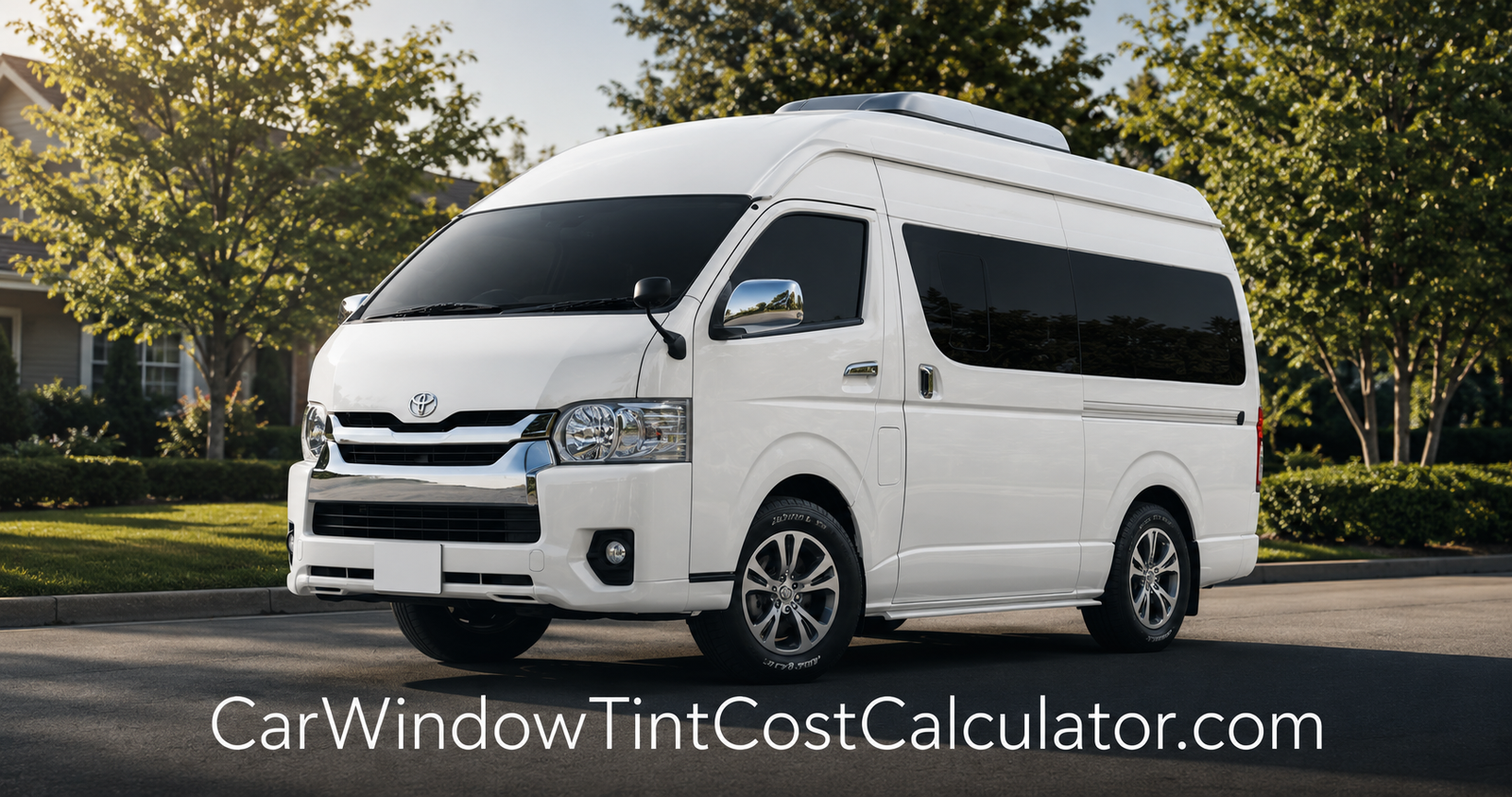
Carbon Film Cost for Van / Minivan in Suburban (USA)
If you drive a van or minivan in a Suburban area and you are looking for a balance between performance and price, carbon film is one of the smartest upgrades you can make. Based on real market data from June 26, 2026, the estimated total cost for tinting one front side window of a van or minivan with 35% VLT carbon film is $170.10 USD. This figure breaks down into a film cost of $112.50 and a labor cost of $45.00. Understanding this window tint cost helps you budget accurately and avoid surprises at the shop. Whether you drive a family hauler like a Honda Odyssey, a Toyota Sienna, or a work van like a Ford Transit, this price point reflects the premium quality of carbon tint without pushing into the ultra-premium ceramic or crystalline brackets.
Many drivers searching for a van / minivan tint cost often overlook the fact that carbon film sits in a sweet spot. It provides excellent heat rejection and a sleek matte finish, yet it remains significantly more affordable than top-tier films. For Suburban drivers, where sun exposure can be intense during summer months, investing $170.10 in carbon film for your front side window is a practical decision that enhances comfort and protects your interior.
Why Carbon Film for a Van / Minivan?
Carbon film stands out because it uses carbon particles embedded in the adhesive layer. Unlike dyed film, carbon does not fade to purple over time. It offers a distinct matte appearance that complements the boxy profile of vans and minivans. Because vans have large glass surfaces, the heat rejection properties of carbon film become immediately noticeable. You will feel less radiant heat from the sun, and your air conditioning system will not have to work as hard.
Another key advantage is signal interference. Carbon film is non-metallic, meaning it will not block GPS, cell phone, or radio signals. This is critical for minivan drivers who rely on navigation systems and hands-free calling. Additionally, carbon film provides up to 40% infrared heat rejection, which is a significant upgrade over basic dyed film. For a van or minivan that spends time in Suburban parking lots or on long highway trips, this translates into real comfort gains.
The 35% VLT (Visible Light Transmission) darkness chosen for this job is a popular middle ground. It offers substantial privacy and glare reduction while remaining legal for front side windows in many states, provided you check local laws. The van / minivan tint cost for this specific configuration is competitive, especially when you consider the longevity of carbon film — typically 5 to 8 years with proper care.
Real Cost Breakdown — What Goes Into $170.10
To help you understand exactly where your money goes, here is the detailed breakdown for the carbon film tint job on your van or minivan:
- Film Cost: $112.50 USD — This covers the high-quality carbon film material, precision-cut to fit one front side window of a van or minivan. The cost reflects the premium nature of carbon film, which is more expensive than dyed film but less than ceramic.
- Labor Cost: $45.00 USD — This includes professional installation, surface preparation, trimming, and final inspection. Vans and minivans often require extra care due to larger window curves and taller door panels.
- Total Estimated Cost: $170.10 USD — This is the all-in price for tinting one front side window with 35% VLT carbon film in Suburban, USA.
To put this in perspective, here is a comparison table of different film types for the same van / minivan front side window:
| Film Type | Est. Cost (1 Window) | Heat Rejection | Lifespan |
|---|---|---|---|
| Dyed Film | $80 – $110 USD | Low (20-30%) | 3-5 years |
| Carbon Film | $170.10 USD | Medium (35-40%) | 5-8 years |
| Ceramic Film | $200 – $300 USD | High (50-60%) | 8-10 years |
| Crystalline Film | $350 – $500 USD | Very High (60-70%) | 10+ years |
As the table shows, the window tint cost for carbon film sits comfortably between entry-level dyed film and high-end ceramic options. The heat rejection and lifespan justify the investment for Suburban drivers who want lasting results.
USA Tint Laws You Must Know
Before you commit to any tint job, understanding your local regulations is essential. Most US states require a minimum of 70% VLT on front side windows. This means that 35% VLT, while popular for rear windows and rear windshields, may not be legal for front side windows in your state. Always check your state's specific regulations before scheduling installation.
For authoritative guidance, consult the tint regulations provided by the International Window Film Association (IWFA). They maintain an up-to-date database of state-by-state laws. Keep in mind that Suburban areas may have additional local ordinances, so verifying with your installer is a smart move. If 35% VLT is not legal for your front side windows, you may need to choose a lighter shade, such as 50% or 70% VLT, to stay compliant.
Non-compliance can result in fines, failed vehicle inspections, or even having to remove the tint. The van / minivan tint cost you pay should include a discussion with your installer about legal limits. A reputable shop will not install illegal tint, so ask upfront about your state's requirements.
What Front Side Tinting Gets You
Opting to tint only the front side window of your van or minivan might seem like a small job, but the benefits are substantial. The driver and front passenger are the most exposed to direct sunlight and glare. By applying 35% VLT carbon film to this single window, you achieve several practical advantages:
- Glare Reduction: Sunlight reflecting off other vehicles or snow is significantly diminished, improving driving safety during morning and evening commutes.
- UV Protection: Carbon film blocks up to 99% of harmful UV rays, protecting your skin and preventing dashboard cracking and fading.
- Interior Temperature Control: Even one tinted front window reduces the greenhouse effect inside the cabin, keeping the steering wheel and seats cooler.
- Privacy: While 35% VLT is not limo-dark, it does obscure the view into the vehicle from a short distance, adding a layer of security for valuables.
- Aesthetic Upgrade: The matte finish of carbon film gives your van or minivan a modern, cohesive look, especially when matched with factory privacy glass on rear windows.
For Suburban families, the improved comfort during school runs and grocery trips makes the window tint cost worthwhile. The $170.10 investment pays for itself in reduced cabin heat and less wear on your vehicle's interior.
Pro Tips Before You Book
To ensure you get the best results from your carbon film installation, keep these professional tips in mind:
- Verify the Installer's Warranty: Reputable shops offer a minimum 5-year warranty on carbon film. Confirm that bubbling, peeling, and fading are covered. A written warranty protects your $170.10 investment.
- Check for Pre-Cut Patterns: Ask if the shop uses computer-cut patterns for your specific van or minivan model. This eliminates the need for razor blades on your glass and reduces the risk of scratches.
- Inspect the Film's Shade: Carbon film has a distinct charcoal matte appearance. Before installation, request a sample to ensure the 35% VLT matches your expectations. Some carbon films can appear slightly darker due to the matte finish.
- Plan for Curing Time: After installation, avoid rolling down the tinted window for at least 3-5 days. This allows the adhesive to cure fully. In Suburban climates with temperature swings, longer curing may be needed.
- Compare Multiple Quotes: While $170.10 is a competitive price for carbon film on a van or minivan, get at least two quotes. Some shops may offer package deals if you tint multiple windows simultaneously.
By following these tips, you can maximize the value of your van / minivan tint cost and enjoy long-lasting performance from your carbon film.
Frequently Asked Questions
Is $170.10 a fair price for carbon film tint on one front side window of my van or minivan?
Yes, $170.10 is a competitive market price for professional carbon film installation on a van or minivan front side window. The film cost of $112.50 reflects the quality of carbon material, and the labor cost of $45.00 is standard for Suburban, USA. You are paying for durability, heat rejection, and a professional finish that dyed film cannot match.
Can I install carbon film myself to save money on the van / minivan tint cost?
While DIY kits are available, carbon film is more challenging to install than dyed film due to its thickness and stiffness. Improper installation leads to bubbles, creases, and premature failure. The $45.00 labor fee for professional installation is a worthwhile investment to ensure a flawless result and warranty coverage.
How long will carbon film last on my van or minivan?
With proper care, carbon film typically lasts between 5 and 8 years. The lifespan depends on sun exposure, cleaning habits, and the quality of installation. Using ammonia-free cleaners and soft microfiber cloths will help maintain the film's appearance and adhesive integrity.
Will 35% VLT carbon film make my front side window too dark at night?
35% VLT is considered a moderate tint. At night, visibility through the front side window remains good for most drivers, though it will appear darker than an untinted window. If you have concerns about night driving, consider 50% VLT as an alternative. Always test a sample before committing to the installation.
Does carbon film void my van or minivan's factory warranty?
Aftermarket window tinting does not void your vehicle's factory warranty unless the installation causes damage to the glass or electrical components. Reputable installers take precautions to avoid such issues. For peace of mind, choose a shop that is certified by the IWFA and offers a satisfaction guarantee.
Related Tint Cost Guides
- Crystalline Film Tint Cost for Station Wagon in Suburban — $728 USD
- Ceramic Film Tint Cost for Electric Vehicle in Suburban — $397 USD
- Ceramic Film Tint Cost for Electric Vehicle in Suburban — $397 USD
Calculate Your Exact Tint Cost
Get a personalized estimate for your vehicle, film type, and location — free, instant, no signup.
→ Use Free Calculator ✈️ Telegram Guide