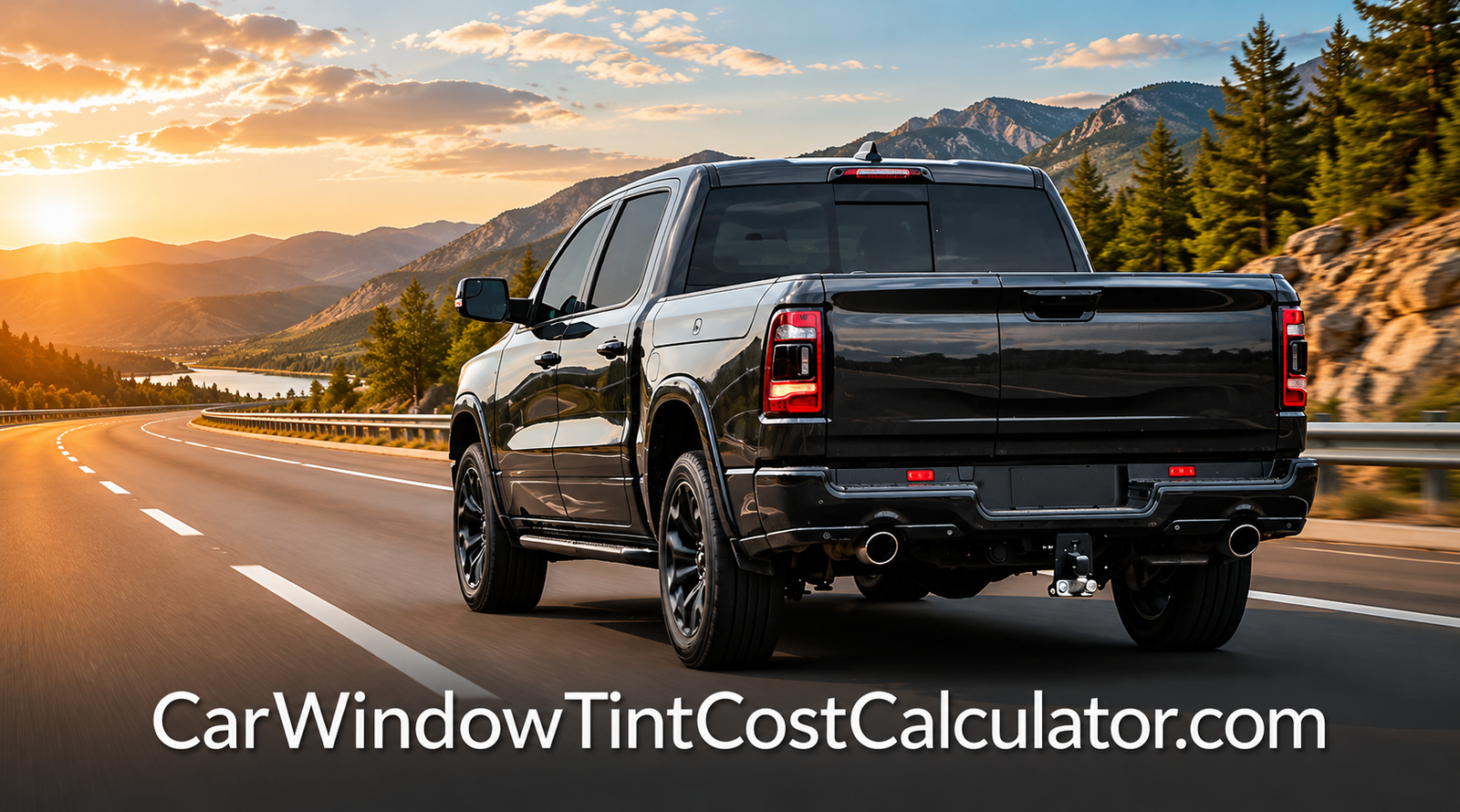
Ceramic Film Cost for Pickup Truck in Suburban (USA)
If you are shopping for premium heat rejection and a clean, professional look for your pickup truck, you have likely encountered the term ceramic film. For drivers in suburban areas across the United States, this film type has become the gold standard for long-term comfort and interior protection. Based on real data collected on June 04, 2026, the total window tint cost for a pickup truck using ceramic film across three windows is $487.23 USD. This figure reflects both the premium material and the skilled labor required to install it correctly. Understanding exactly what you are paying for and how it compares to other options is essential before you book your appointment.
Why Ceramic Film for a Pickup Truck?
Pickup trucks present a unique challenge for window tinting. The large, often upright glass panels on the front side, rear side, and rear window expose the cabin to significant solar heat gain. A standard dyed or carbon film can help with glare and privacy, but it cannot match the thermal performance of ceramic film. This film uses nano-ceramic particles that block up to 99% of UV rays and reject infrared heat without interfering with radio, GPS, or cellular signals. For a pickup truck that doubles as a work vehicle or family hauler, this means a cooler cabin, less strain on your air conditioning system, and reduced fading of your upholstery and dashboard. The pickup truck tint cost for ceramic film is higher than entry-level options, but the durability and performance justify the investment for suburban drivers who spend significant time on the road.
Real Cost Breakdown — What Goes Into $487.23
The total estimated cost of $487.23 USD is not a single lump sum. It is divided into two primary components: the film itself and the labor. The film cost for this specific job is $220.50 USD, while the labor cost is $190.00 USD. These numbers reflect the premium nature of ceramic film and the precision required to tint the front side, rear side, and rear window of a pickup truck. Labor costs in suburban areas tend to be moderate, but the complexity of the rear window on modern trucks, which often includes defroster lines and a sliding panel, can increase installation time.
To help you see where your money goes, here is a direct comparison of popular film types available for a pickup truck in suburban USA. Prices reflect a three-window job (front side, rear side, rear window).
| Film Type | Est. Cost (3 Windows) | Heat Rejection | Lifespan |
|---|---|---|---|
| Dyed Film | $120 - $180 | Low (approx. 30-40%) | 3 - 5 years |
| Carbon Film | $200 - $280 | Moderate (approx. 40-50%) | 6 - 8 years |
| Ceramic Film | $487.23 | High (approx. 60-70%) | 10+ years |
| Crystalline Film | $550 - $700 | Very High (approx. 70-80%) | 10+ years |
As the table shows, the ceramic film sits in a sweet spot between performance and price. While crystalline film offers slightly higher heat rejection, the cost increase is significant. For most pickup truck owners in suburban areas, ceramic film provides the best balance of value, longevity, and comfort. The window tint cost for ceramic film is roughly double that of dyed film, but you are paying for technology that lasts more than a decade and performs consistently in all seasons.
USA Tint Laws You Must Know
Before you proceed with any tinting project, it is critical to understand the legal limits in your area. While this job specifies 35% VLT, which is a popular darkness for rear and side windows, you must verify that this level is legal for your specific vehicle and location. Most US states require a minimum of 70% VLT on front side windows. This means the front side windows of your pickup truck must allow at least 70% of visible light to pass through. If you install 35% VLT on the front side windows in a state that mandates 70%, you risk receiving a citation and being forced to remove the film.
For the rear side windows and rear window of a pickup truck, many states have more lenient regulations or no restrictions at all. However, this is not universal. Some states apply the same 70% limit to all windows, while others allow any darkness on rear glass. Always check your state's specific regulations before scheduling your installation. A reliable resource for verifying these rules is the tint regulations page provided by the International Window Film Association. Ignorance of the law is not a defense, and a professional installer should always ask for your state of registration before cutting film. The pickup truck tint cost is an investment, and you want to ensure the final result is both legal and functional.
What Front Side, Rear Side, Rear Window Tinting Gets You
Choosing to tint only the front side, rear side, and rear window is a strategic decision. Many pickup truck owners skip the windshield for safety and legal reasons, focusing instead on the three main glass panels that contribute most to cabin heat. The front side windows are often the most exposed to direct sunlight during your commute. Applying ceramic film at 35% VLT here dramatically reduces glare and heat without making nighttime visibility dangerous. The rear side windows, which are typically larger on a pickup truck, benefit from the same heat rejection while also providing privacy for passengers or cargo in the back seat.
The rear window is a unique challenge. On many modern pickup trucks, this window includes a sliding mechanism and defroster lines. A skilled installer must work carefully around these features to avoid damaging the film or the window components. When properly installed, ceramic film on the rear window prevents the sun from baking the rear cabin area, which is especially important if you carry pets, tools, or children in the back. The combination of these three windows creates a comprehensive thermal barrier that keeps the entire cab cooler. For the window tint cost of $487.23, you are essentially upgrading the climate control of your truck without replacing any mechanical parts. This is one of the most effective modifications you can make for daily driving comfort in suburban climates where summer temperatures regularly exceed 90 degrees Fahrenheit.
Pro Tips Before You Book
Before you commit to a specific installer or schedule your appointment, consider these professional recommendations. First, always ask to see a sample of the ceramic film on a test piece of glass. Look at it from different angles and in direct sunlight. Some ceramic films have a slight blue or green hue, while others are nearly neutral. The 35% VLT darkness will appear different on your truck's factory glass compared to a clear sample, so request a demonstration on a similar tinted surface.
Second, verify that the installer offers a warranty on both the film and the labor. A quality ceramic film should come with a manufacturer's warranty that covers peeling, bubbling, fading, and discoloration for at least 10 years. The labor warranty should cover installation defects such as dust contamination or lifting edges for a minimum of one year. The pickup truck tint cost includes labor, and you want that labor backed by a guarantee.
Third, allow adequate curing time. After installation, the film needs several days to fully adhere to the glass. During this period, avoid rolling down the windows or cleaning the interior glass. The adhesive needs time to bond, and moisture trapped behind the film will evaporate naturally. Your installer will provide specific aftercare instructions, and following them precisely is the best way to ensure your investment lasts. Finally, compare quotes from at least two local shops. While the window tint cost of $487.23 is a reliable estimate, prices can vary based on the specific brand of ceramic film used and the complexity of your truck's rear window design.
Frequently Asked Questions
Is $487.23 a typical price for ceramic film on a pickup truck?
Yes, this price is very typical for a three-window job using premium ceramic film in a suburban area. The film cost of $220.50 and labor cost of $190.00 reflect the quality of materials and the skill required for installation. Prices may be slightly higher in major metropolitan areas or lower in rural locations, but $487.23 is a realistic benchmark for this service.
Will 35% VLT ceramic film make my windows look very dark?
35% VLT means that 35% of visible light passes through the film. This is considered a medium darkness. It provides significant privacy and heat rejection without making the cabin feel cave-like. From the outside, you will see a noticeable shade, but you will still be able to see shapes and movement inside during daylight hours. It is a popular choice for pickup truck owners who want a balance between style and visibility.
Does ceramic film interfere with my truck's radio or GPS?
No. One of the primary advantages of ceramic film over metallic film is that it does not contain metal particles. This means it will not block radio, GPS, cellular, or satellite signals. Your Bluetooth, navigation, and keyless entry systems will function normally. This is a key reason why ceramic film is preferred for modern vehicles with advanced electronics.
How long does ceramic film last on a pickup truck?
A high-quality ceramic film installed by a professional should last 10 years or more. The film is resistant to fading, bubbling, and peeling. However, lifespan can be affected by extreme weather conditions and how well you maintain the film. Avoiding abrasive cleaners and using a soft microfiber cloth for cleaning will help preserve the film's appearance and performance over time.
Can I tint my pickup truck's rear window if it has a sliding panel?
Yes, a professional installer can tint a rear window with a sliding panel. However, it requires extra care and skill. The film must be cut precisely around the sliding mechanism and the defroster lines. Some installers may charge a small additional fee for this complexity, but the labor cost of $190.00 in this estimate already accounts for the standard difficulty of a pickup truck rear window.
Related Tint Cost Guides
Calculate Your Exact Tint Cost
Get a personalized estimate for your vehicle, film type, and location — free, instant, no signup.
→ Use Free Calculator ✈️ Telegram Guide