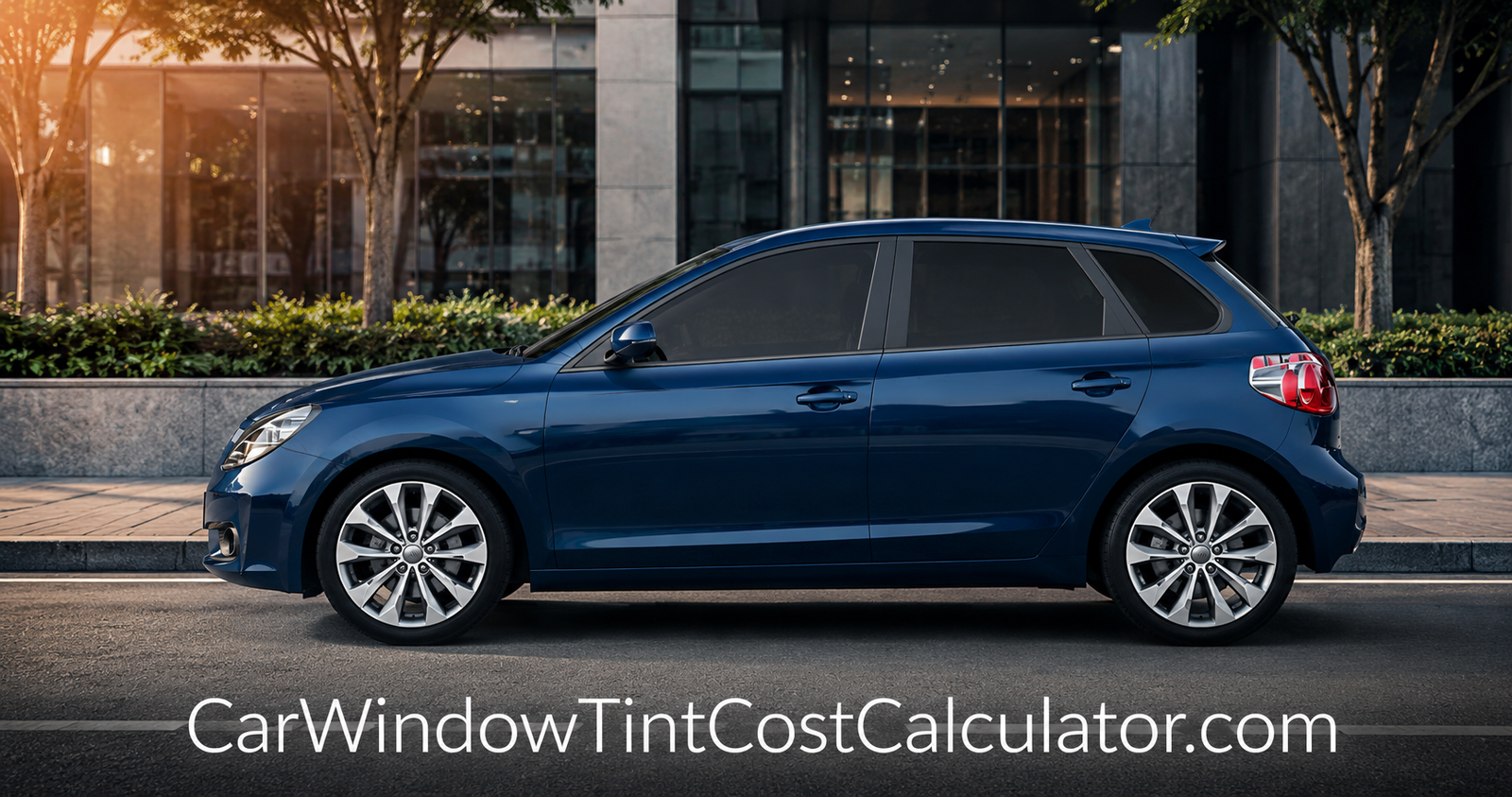
Dyed Film Cost for Hatchback in Suburban (USA)
If you own a hatchback and live in a suburban area of the United States, you are likely looking for an affordable way to improve privacy, reduce glare, and protect your interior without breaking the bank. Based on real data from June 14, 2026, the estimated total cost for a 35% VLT dyed film installation on a hatchback in Suburban, USA is $169.88 USD. This price point makes dyed film one of the most accessible options for drivers who want a darker, cleaner look without the premium price tag of high-end films. Understanding this window tint cost breakdown helps you decide if dyed film is the right choice for your daily driver.
Why Dyed Film for a Hatchback?
Dyed window tint is a popular entry-level option, especially for hatchback owners in suburban settings. The film uses a layer of dye between an adhesive layer and a protective top coat to absorb solar heat and reduce visible light transmission. For a hatchback, which often has a large rear window and multiple side windows, dyed film provides a uniform dark appearance that enhances the vehicle's sporty aesthetic.
One of the biggest advantages of dyed film is its cost-effectiveness. At $169.88 USD for a full three-window job (front side, rear side, and rear window), it is significantly cheaper than ceramic or crystalline alternatives. Suburban driving conditions — stop-and-go traffic, parking lots, and highway commutes — benefit from the glare reduction dyed film offers. While it does not provide the same heat rejection as premium films, it still makes a noticeable difference in cabin comfort during summer months.
Another reason dyed film works well for hatchbacks is the ease of installation on the large rear hatch window. The film conforms well to curved glass, and professional installers in suburban shops are experienced with this configuration. If you are searching for a low-cost hatchback tint cost that looks great and performs adequately, dyed film is your best bet.
Real Cost Breakdown — What Goes Into $169.88
To help you understand exactly where your money goes, here is the real cost breakdown for a 35% VLT dyed film installation on a hatchback in Suburban, USA. The total estimated cost of $169.88 USD is split between materials and labor.
- Film Cost: $74.80 USD — This covers the dyed film material for three windows (front side, rear side, rear window). The price reflects the lower manufacturing cost of dye-based films compared to metalized or ceramic options.
- Labor Cost: $82.50 USD — Professional installation in a suburban shop includes cleaning, cutting, heat shrinking, and precise application. The labor rate is moderate in suburban areas, making it affordable.
To give you perspective on how dyed film compares to other options, here is a comparison table showing realistic USA prices for a hatchback:
| Film Type | Est. Cost | Heat Rejection | Lifespan |
|---|---|---|---|
| Dyed Film | $169.88 USD | Low (approx. 35-45%) | 3-5 years |
| Carbon Film | $300 - $400 USD | Medium (approx. 40-50%) | 5-7 years |
| Ceramic Film | $400 - $600 USD | High (approx. 50-60%) | 10+ years |
| Crystalline Film | $500 - $800 USD | Very High (approx. 60-70%) | 10+ years |
As you can see, dyed film offers the lowest window tint cost for a hatchback, making it ideal for budget-conscious owners. However, if you prioritize heat rejection and longevity, upgrading to carbon or ceramic may be worth the extra investment.
USA Tint Laws You Must Know
Before you schedule your installation, it is critical to understand the legal limits for window tint darkness in the United States. Most US states require a minimum of 70% VLT on front side windows. This means that with a 35% VLT dyed film on your front side windows, you may be violating the law in many states. However, rear side windows and the rear window typically have much more lenient regulations, often allowing any darkness level.
Because laws vary significantly from state to state — and even between counties — you must verify your local regulations before proceeding. A reliable resource for checking current rules is the tint regulations page provided by the International Window Film Association (IWFA). They maintain up-to-date information on VLT requirements, reflective restrictions, and medical exemptions. Ignoring these laws can result in fines, failed vehicle inspections, or having to remove the film entirely.
For suburban drivers, law enforcement tends to be more active in residential areas and school zones. If you choose 35% VLT dyed film, consider applying it only to the rear side and rear windows to stay compliant with front window laws. Always consult a professional installer who knows your state's specific rules before making a final decision on your hatchback tint cost.
What Front Side, Rear Side, Rear Window Tinting Gets You
Choosing to tint the front side, rear side, and rear window of your hatchback covers nearly all the glass on the vehicle except the windshield. This configuration is the most popular among hatchback owners because it provides a balanced look and functional benefits without obstructing the driver's forward view.
Front Side Windows: Tinting these windows with 35% VLT dyed film reduces glare from oncoming headlights and sunlight during suburban commutes. It also adds a degree of privacy for the driver and front passenger. However, as noted earlier, many states restrict front side window darkness, so verify compliance.
Rear Side Windows: These windows benefit the most from dyed film because they are often used by passengers or for cargo storage. Darker tint here keeps the interior cooler and protects items from UV damage. In a hatchback, the rear side windows are typically smaller, making installation quick and cost-effective.
Rear Window: The large rear hatch window is a defining feature of hatchbacks. Tinting it with dyed film reduces sun glare through the rearview mirror and prevents the interior from fading. It also enhances the vehicle's sleek profile. Because the rear window is large, the film cost of $74.80 USD accounts for the extra material needed.
Together, these three windows create a cohesive dark look that improves comfort and privacy. For a total window tint cost of $169.88 USD, you get substantial coverage that transforms the driving experience in suburban environments.
Pro Tips Before You Book
To get the most out of your dyed film installation, follow these professional recommendations. First, always choose a certified installer with experience on hatchback models. The large rear window requires precise heat shrinking to avoid wrinkles or bubbles. Ask to see examples of their previous hatchback work.
Second, understand that dyed film has a shorter lifespan than premium films. Expect it to last between 3 to 5 years before fading or bubbling occurs. In suburban climates with intense sun exposure, you may notice color changes sooner. Plan for a replacement within that window to maintain appearance and performance.
Third, consider the 35% VLT darkness carefully. While it looks great, it can make nighttime driving more challenging, especially in poorly lit suburban streets. If you frequently drive after dark, you might prefer a lighter tint like 50% VLT for the front side windows.
Finally, ask about warranty coverage. Many dyed films come with a limited manufacturer warranty against peeling, cracking, or delamination. Confirm the warranty terms before paying, as this protects your hatchback tint cost investment. Also, avoid washing your windows for at least 3-5 days after installation to allow the adhesive to cure fully.
Frequently Asked Questions
How long does dyed window tint last on a hatchback?
Dyed film typically lasts between 3 to 5 years under normal suburban driving conditions. Exposure to direct sunlight, frequent car washes, and extreme temperatures can shorten its lifespan. Regular maintenance and parking in shaded areas can help extend the life of your dyed film.
Can I install dyed film myself to save on labor cost?
While DIY installation is possible, it is not recommended for hatchbacks due to the large rear window curvature. Professional installation ensures proper adhesion, no bubbles, and compliance with local laws. The labor cost of $82.50 USD is a worthwhile investment for a clean, long-lasting result.
Does 35% VLT dyed film provide UV protection?
Yes, most dyed films block up to 99% of harmful UV rays, protecting your interior from fading and your skin from sun damage. However, dyed film absorbs heat rather than reflecting it, so it offers less heat rejection compared to ceramic or crystalline films.
Will dyed film affect my hatchback's visibility at night?
At 35% VLT, visibility at night is reduced, especially through the rear window and rear side windows. This is a trade-off for the privacy and glare reduction during the day. If you frequently drive at night in suburban areas, consider a lighter tint for the front side windows.
Is $169.88 USD a fair price for hatchback tinting?
Yes, $169.88 USD is a very competitive price for professional dyed film installation on a hatchback. It reflects the lower material cost of dyed film and standard suburban labor rates. Comparing this window tint cost to carbon or ceramic options shows it is the most budget-friendly choice.
Related Tint Cost Guides
- Carbon Film Tint Cost for SUV in Suburban — $134 USD
- Hybrid Film Tint Cost for Sedan in Suburban — $300 USD
- Carbon Film Tint Cost for Hatchback in Suburban — $388 USD
Calculate Your Exact Tint Cost
Get a personalized estimate for your vehicle, film type, and location — free, instant, no signup.
→ Use Free Calculator ✈️ Telegram Guide