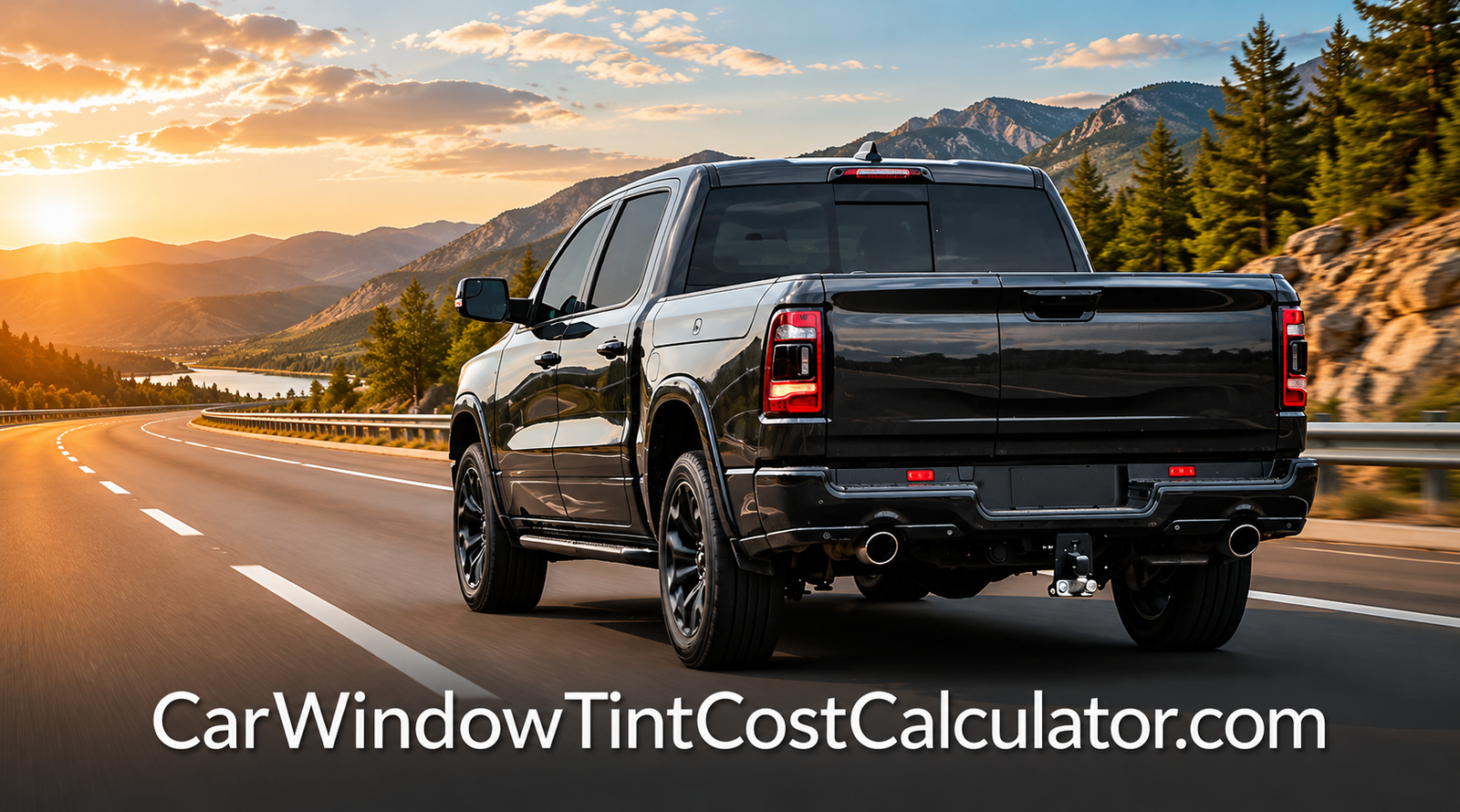
Hybrid Film Cost for Pickup Truck in Suburban (USA)
If you drive a pickup truck in suburban America and you are looking for a balance between performance and price, hybrid film is one of the most practical choices on the market. For a typical pickup truck with front side, rear side, and rear window tinting at 35% VLT, the estimated total cost comes to $272.38 USD. This figure represents a sweet spot where you get meaningful heat rejection and durability without paying the premium of ceramic or crystalline films. Understanding the window tint cost for your specific vehicle is the first step toward making an informed upgrade. In the suburban USA market, this price point makes hybrid film a strong contender for truck owners who want quality without overspending.
The pickup truck tint cost of $272.38 includes both materials and professional labor. Many truck owners assume tinting a larger vehicle will break the bank, but hybrid film offers an accessible entry point. This cost reflects a real-world scenario in a suburban setting where labor rates are moderate and film pricing is competitive. Whether you use your truck for daily commuting, weekend hauling, or family trips, this investment protects your interior and improves driving comfort.
Why Hybrid Film for a Pickup Truck?
Hybrid film, sometimes called semi-metallized film, combines a layer of dye with small metallic particles. This construction gives you the best of both worlds: the glare reduction and color stability of dyed film, plus the heat rejection and strength of metallized film. For a pickup truck, this is especially valuable because trucks often sit in direct sunlight for long periods, whether parked at a job site or in a suburban driveway.
One of the main reasons to choose hybrid film for a pickup truck is its durability. The metallic component helps block infrared heat, reducing cabin temperatures significantly compared to basic dyed film. At 35% VLT, you get a moderate shade that reduces glare without making nighttime driving difficult. This is a popular darkness level for truck owners who want privacy and sun protection while staying legal on most roads.
Another advantage is that hybrid film does not interfere with electronic signals as much as fully metallized films. If your pickup truck has a GPS antenna, satellite radio, or cell signal booster near the windows, hybrid film is a safer choice. It also resists fading and bubbling better than standard dyed film, giving you a longer-lasting result. For suburban drivers who keep their trucks for several years, this longevity adds real value to the pickup truck tint cost.
Real Cost Breakdown — What Goes Into $272.38
Your total estimated cost of $272.38 USD is divided into two main components: film cost and labor cost. The film cost is $154.70 USD, which covers the hybrid material for three windows: front side, rear side, and rear window. The labor cost is $97.50 USD, reflecting professional installation in a suburban shop. This breakdown is typical for a pickup truck, where window sizes are larger than sedans but smaller than full-size SUVs.
The film cost accounts for the quality of hybrid material, which is priced above basic dyed film but below ceramic and crystalline options. Labor costs vary by location, but suburban shops often offer competitive rates. When evaluating the window tint cost for your truck, remember that professional installation ensures proper adhesion, no bubbles, and a clean edge finish. DIY kits may save money upfront but often lead to poor results that require costly removal later.
To help you compare, here is a table showing how hybrid film stacks up against other film types for a pickup truck in suburban USA:
| Film Type | Est. Cost (3 Windows) | Heat Rejection | Lifespan |
|---|---|---|---|
| Dyed Film | $150 - $200 | Low (30-40%) | 2-3 years |
| Hybrid Film | $272.38 | Medium (40-50%) | 4-6 years |
| Carbon Film | $300 - $400 | Medium-High (45-55%) | 5-7 years |
| Ceramic Film | $450 - $650 | High (50-70%) | 8-10 years |
| Crystalline Film | $700 - $900 | Very High (60-80%) | 10+ years |
As the table shows, hybrid film sits comfortably in the middle of the price and performance spectrum. For $272.38, you get better heat rejection than dyed film and a longer lifespan, making it a smart upgrade for suburban truck owners. The pickup truck tint cost for hybrid film is significantly lower than ceramic or crystalline, yet it still delivers noticeable comfort improvements.
USA Tint Laws You Must Know
Before you book your tinting appointment, it is critical to understand the laws in your area. Most US states require a minimum of 70% VLT on front side windows. This means that if you choose 35% VLT for your front side windows, you may be in violation depending on your state. However, many states allow darker tint on rear side windows and rear windows, which is why this package includes those three windows specifically.
Since your pickup truck is located in suburban USA, you should check your state's specific regulations. Laws vary widely from state to state, and even some counties have additional restrictions. For the most accurate and up-to-date information, refer to authoritative resources like tint regulations provided by the International Window Film Association. They maintain a comprehensive database of state laws, including VLT limits, medical exemptions, and enforcement policies.
Keep in mind that 35% VLT is a common choice for rear windows and rear side windows in many states. If your front side windows need to be lighter, you can always combine a lighter film on the front with 35% on the rear. A professional installer will know the local laws and can guide you. Ignoring tint laws can lead to fines, failed vehicle inspections, or even having to remove and replace the film, which adds unnecessary cost to your window tint cost.
What Front Side, Rear Side, Rear Window Tinting Gets You
Choosing to tint the front side, rear side, and rear window of your pickup truck covers the most important areas for heat control, privacy, and safety. The front side windows are where you get the most direct sunlight while driving, especially during morning and evening commutes. Tinting these windows with hybrid film at 35% VLT reduces glare significantly, making it easier to see the road and reducing eye strain.
The rear side windows are often the largest windows on a pickup truck, especially if you have a crew cab or extended cab configuration. These windows let in a lot of heat, which can make the back seat uncomfortable for passengers or pets. Tinting them with hybrid film helps keep the entire cabin cooler, which is especially valuable in suburban climates where summer temperatures can soar. It also adds a layer of privacy for items stored in the back seat.
The rear window is another large surface area that contributes to interior heat buildup. On a pickup truck, the rear window is often vertical or slightly angled, making it a prime target for direct sunlight. Tinting this window with hybrid film blocks UV rays and reduces heat without compromising your rear visibility, especially at 35% VLT which is still relatively light. Together, these three windows create a cohesive look while maximizing the functional benefits of your pickup truck tint cost.
Pro Tips Before You Book
First, always verify the reputation of the installation shop. Look for reviews specifically mentioning pickup trucks, as the larger windows require more skill to install without creases or bubbles. A good installer will also offer a warranty on both the film and the labor, which protects your investment. Ask about the warranty duration before you agree to the window tint cost.
Second, consider the time of year you schedule the installation. Hybrid film needs a few days to cure properly, and direct sunlight helps the adhesive bond. In suburban USA, scheduling your tint job in late spring or early summer gives you optimal curing conditions. Avoid tinting right before a long road trip, as rolling down the windows too soon can cause peeling.
Third, think about your daily driving habits. If you frequently drive at night, 35% VLT is a good balance because it is dark enough to reduce glare during the day but light enough to see clearly at night. For truck owners who do a lot of highway driving, the heat rejection of hybrid film can make a noticeable difference in cabin comfort, reducing the need for excessive air conditioning and improving fuel efficiency slightly.
Finally, get a written estimate that breaks down the film cost, labor cost, and any additional fees. The pickup truck tint cost of $272.38 we discussed is a realistic figure, but prices can vary based on the shop's overhead and the specific brand of hybrid film used. Comparing two or three quotes will ensure you get a fair deal without sacrificing quality.
Frequently Asked Questions
How long does hybrid film last on a pickup truck?
Hybrid film typically lasts between 4 to 6 years, depending on sun exposure and maintenance. With proper care, including gentle cleaning and avoiding abrasive materials, you can extend its lifespan. The window tint cost for hybrid film is a worthwhile investment given this durability.
Will 35% VLT tint make it hard to see at night?
35% VLT is considered a moderate darkness level. Most drivers find it comfortable for nighttime driving, as it reduces headlight glare without significantly reducing visibility. It is one of the most popular choices for truck owners who want a balance between daytime privacy and nighttime safety.
Can I wash my truck right after tinting?
No, you should wait at least 3 to 5 days before washing your truck after tinting. The adhesive needs time to cure, and water pressure can cause the film to peel or bubble. Your installer will give you specific aftercare instructions based on the film and local climate.
Is hybrid film better than carbon film for a pickup truck?
Carbon film offers slightly better heat rejection and a matte finish, but it costs more. Hybrid film is a more budget-friendly option that still provides good heat rejection and durability. For the pickup truck tint cost of $272.38, hybrid film is an excellent value.
Do I need to tint all windows on my pickup truck?
Not necessarily, but tinting the front side, rear side, and rear window covers the most impactful areas. If you skip the front side windows, you will still get heat reduction in the rear, but the overall cabin temperature will remain higher. This package is designed to give you the best balance of cost and comfort.
Related Tint Cost Guides
- Carbon Film Tint Cost for Coupe in Suburban — $277 USD
- Carbon Film Tint Cost for Coupe in Suburban — $277 USD
- Crystalline Film Tint Cost for Electric Vehicle in Suburban — $853 USD
Calculate Your Exact Tint Cost
Get a personalized estimate for your vehicle, film type, and location — free, instant, no signup.
→ Use Free Calculator ✈️ Telegram Guide