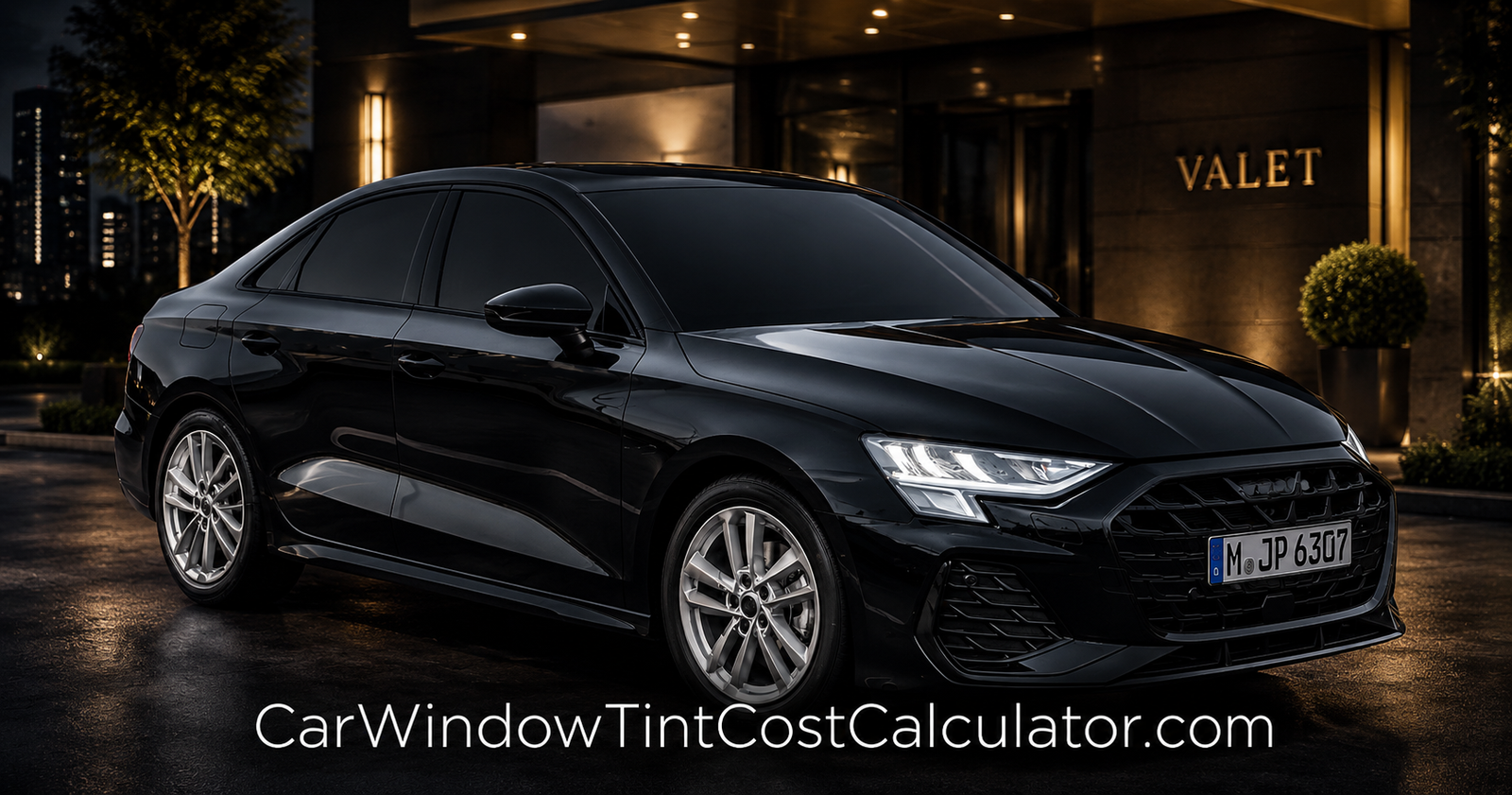
Carbon Film Cost for Luxury Sedan in Suburban (USA)
If you are searching for a balance between premium aesthetics and real-world performance, carbon film window tint offers an excellent upgrade for your luxury sedan. For a specific installation on June 15, 2026, in a suburban area of the United States, the estimated total cost for tinting the front side, rear side, and rear window came to $627.48 USD. This figure represents a smart investment in comfort, privacy, and vehicle protection. Understanding the window tint cost for a luxury sedan requires looking at the film quality, labor expertise, and the specific needs of suburban driving. This guide breaks down exactly what you get for your money and why carbon film is a top choice for discerning owners.
Why Carbon Film for a Luxury Sedan?
Carbon film is a step above basic dyed film, using microscopic carbon particles to block heat and UV rays. Unlike metallic films, carbon does not interfere with GPS, cellular signals, or key fob operation, which is critical for modern luxury sedans equipped with advanced electronics. The matte, non-reflective finish of carbon film enhances the sleek lines of a luxury sedan without the shiny, mirrored look of some other films.
For owners in suburban environments, where you might park in driveways, shopping centers, or under partial shade, carbon film provides consistent heat rejection without fading over time. The 20% VLT (Visible Light Transmission) darkness offers a deep, uniform tint that significantly reduces glare from oncoming headlights and harsh sunlight. This makes daily commutes and long highway drives more comfortable. The luxury sedan tint cost reflects this balance of performance and style, positioning carbon film as a mid-to-high-tier option that delivers tangible benefits without the premium price tag of ceramic.
Another key advantage is durability. Carbon particles are naturally stable and resist UV degradation, meaning the film will not turn purple or bubble as quickly as dyed alternatives. For a luxury sedan owner who plans to keep the vehicle for several years, this longevity is a major factor in the overall value proposition. The window tint cost for carbon film is an investment in maintaining your car’s interior resale value and your personal comfort.
Real Cost Breakdown — What Goes Into $627.48
The total cost of $627.48 USD for your luxury sedan is composed of two primary components: the film itself and the professional labor required for installation. The film cost for this specific job is $238.00 USD, while the labor cost is $168.00 USD. These figures are based on actual data from a suburban USA installation on June 15, 2026, for a three-window package covering the front side, rear side, and rear window.
The film cost reflects the quality of carbon film, which sits between entry-level dyed films and high-end ceramic or crystalline options. Labor costs in suburban areas tend to be moderate, reflecting a balance between metropolitan pricing and rural rates. Experienced installers charge a premium for precision cutting, proper heat shrinking, and bubble-free application, especially on the curved rear window of a luxury sedan.
To help you compare, here is a realistic breakdown of different film types available for a luxury sedan in the USA. These prices are estimates based on current market trends and should be used as a general guide.
| Film Type | Est. Cost (3 Windows) | Heat Rejection | Lifespan |
|---|---|---|---|
| Dyed Film | $170 – $250 | Low (20-35%) | 3-5 years |
| Carbon Film | $627.48 | Medium (40-50%) | 5-8 years |
| Ceramic Film | $800 – $1,200 | High (50-70%) | 10+ years |
| Crystalline Film | $1,200 – $1,800 | Very High (60-80%) | 10+ years |
As the table shows, the luxury sedan tint cost for carbon film offers a compelling middle ground. You get significantly better heat rejection than dyed film, with a lifespan that justifies the investment. The window tint cost for ceramic or crystalline options can be nearly double, making carbon film an excellent value for most suburban drivers.
USA Tint Laws You Must Know
Before you proceed with a 20% VLT installation, understanding your local tint laws is critical. Most US states require a minimum of 70% VLT on front side windows, which means 20% VLT is likely illegal for those windows in many jurisdictions. However, rear side windows and the rear window often have fewer restrictions or no limits at all, especially on passenger vehicles like a luxury sedan.
The 20% VLT selected for this installation is a very dark tint, providing maximum privacy and heat reduction. It is essential to verify your state’s specific regulations before booking. You can check the most current guidelines through the tint regulations provided by the International Window Film Association (IWFA). They offer a comprehensive state-by-state database.
For a luxury sedan in suburban USA, many owners choose to tint the rear windows and rear window with a dark film like 20% VLT, while keeping the front side windows lighter to comply with local laws. This approach balances legality with the benefits of deep tinting. Always ask your installer about compliance options, as reputable shops will refuse to apply illegal tint levels on front windows.
What Front Side, Rear Side, Rear Window Tinting Gets You
This specific package covers three windows: the two front side windows, the two rear side windows, and the rear window. For a luxury sedan, this combination provides comprehensive coverage that enhances both aesthetics and functionality. The window tint cost for this setup is calculated per window, with the rear window typically being the most expensive due to its size and curvature.
Tinting the front side windows reduces glare from the sun and oncoming headlights, improving driver visibility and reducing eye strain. The 20% VLT on the rear side windows offers significant privacy for passengers, making it harder for outsiders to see into the vehicle. This is particularly valuable for luxury sedan owners who carry valuables or simply prefer a more secluded cabin experience.
The rear window tinting completes the look, creating a uniform, seamless appearance across the entire back half of the car. It also helps protect rear passengers and the rear deck from UV damage. Over time, this reduces fading of upholstery, dashboards, and any items stored in the back. The luxury sedan tint cost for this three-window package delivers a cohesive, professional result that enhances the overall driving experience.
Pro Tips Before You Book
First, always request a digital cut or plotter-cut film for your luxury sedan. Hand-cutting can lead to uneven edges and potential scratching of the glass, especially on the complex curves of a sedan’s rear window. Professional installers use computer-generated patterns for a precise fit.
Second, understand the warranty offered. Carbon film typically comes with a manufacturer’s warranty against fading, peeling, and bubbling. Ensure the warranty is transferable if you sell the vehicle, as this adds to the resale value. Ask the installer for a written warranty card before the work begins.
Third, allow for proper curing time. After installation, the carbon film needs several days to fully adhere and dry out any residual moisture. Avoid rolling down the windows for at least 3-5 days, and do not clean the interior of the glass for a week. Following these precautions ensures a flawless finish and maximizes the lifespan of your tint.
Finally, compare quotes from multiple shops in your suburban area. While the window tint cost we provided is accurate for this specific job, prices can vary based on shop reputation, experience with luxury vehicles, and current promotions. A slightly higher labor cost from a top-tier installer is often worth the investment for a flawless result on a premium car.
Frequently Asked Questions
Is $627.48 a fair price for carbon film on a luxury sedan?
Yes, this price is competitive for a professional installation of carbon film on a luxury sedan in suburban USA. The film cost of $238.00 and labor cost of $168.00 reflect a fair market rate for quality materials and skilled work. Always get a written estimate to confirm what is included.
Will 20% VLT make it hard to see at night?
20% VLT is considered very dark, and it will reduce visibility at night, especially in poorly lit areas or during heavy rain. Many drivers find it manageable with caution, but it is important to be aware of the limitations. Consider a lighter tint like 35% VLT for front side windows if night driving is a concern.
How long does carbon film last compared to other films?
Carbon film typically lasts between 5 and 8 years, depending on sun exposure and maintenance. This is significantly longer than dyed film (3-5 years) but less than ceramic or crystalline films (10+ years). Proper care, such as using ammonia-free cleaners, can extend the lifespan.
Can I install carbon film myself to save money?
While DIY kits are available, professional installation is highly recommended for a luxury sedan. The complex curves of the rear window and the precision required for a bubble-free finish are difficult to achieve without experience. Mistakes can ruin the film and cost more to fix, negating any savings on the window tint cost.
Does carbon film interfere with the defroster lines on the rear window?
No, carbon film is non-metallic and will not interfere with rear window defroster grids. The film adheres directly to the glass and allows the defroster to function normally. This is a key advantage over metallic films, which can sometimes cause issues with defrosters and antennas.
Related Tint Cost Guides
- Carbon Film Tint Cost for Hatchback in Suburban — $388 USD
- Dyed Film Tint Cost for Hatchback in Suburban — $170 USD
- Dyed Film Tint Cost for Large SUV in Suburban — $448 USD
Calculate Your Exact Tint Cost
Get a personalized estimate for your vehicle, film type, and location — free, instant, no signup.
→ Use Free Calculator ✈️ Telegram Guide