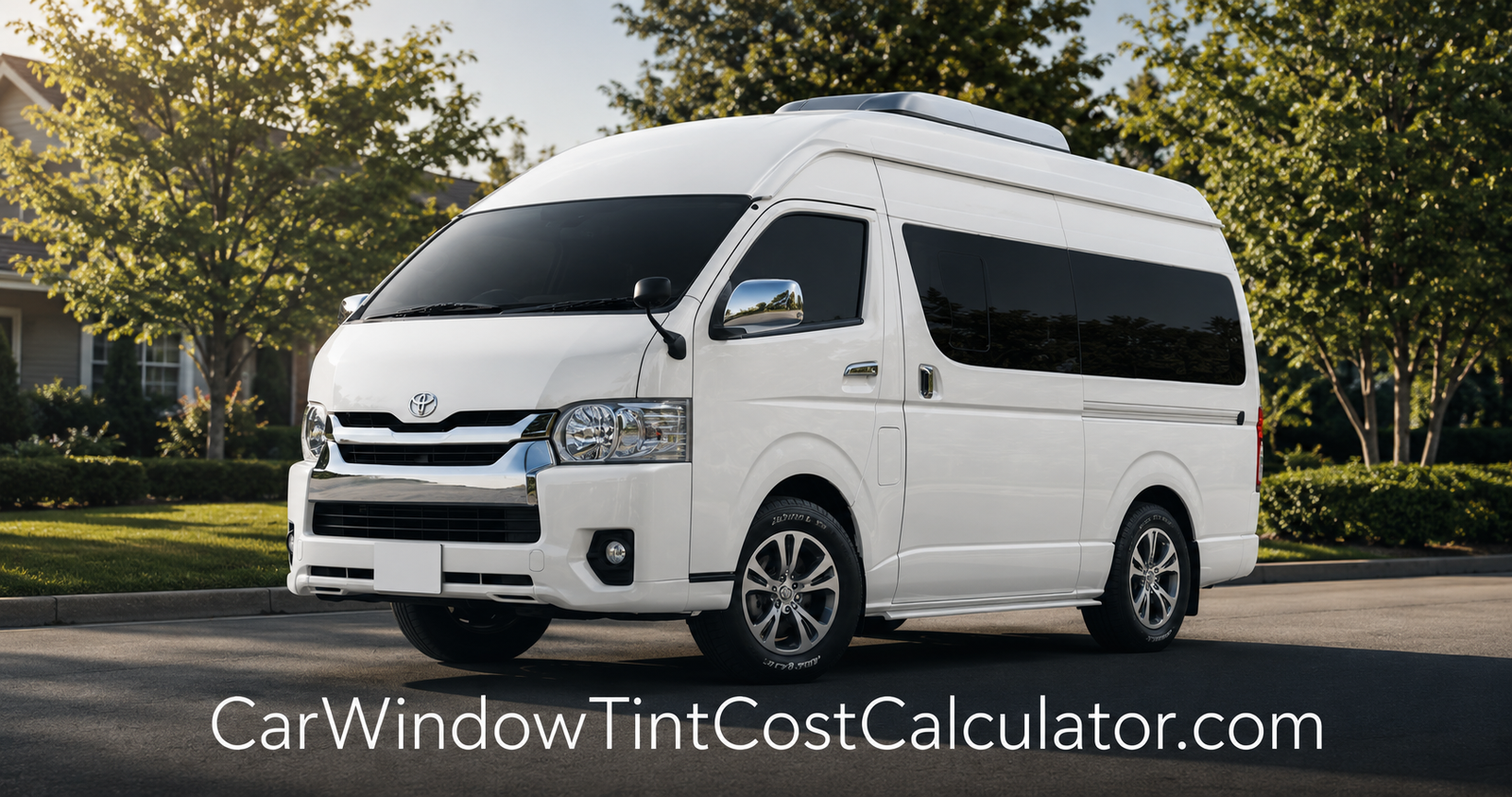
Dyed Film Cost for Van / Minivan in Suburban (USA)
If you drive a van or minivan in a suburban area, you are likely looking for a practical, budget-friendly way to reduce glare and add a layer of privacy without breaking the bank. For many owners, dyed film offers the most accessible entry point into window tinting. Based on real data from June 27, 2026, the estimated total cost for dyed film on a van / minivan in Suburban, USA comes to exactly $104.49 USD. This figure includes the film itself and professional installation, making it one of the most affordable window tint options available for your vehicle. Understanding what you get for that price, and how it compares to other films, is the first step in making an informed decision about your window tint cost.
Why Dyed Film for a Van / Minivan?
Dyed window film is a popular choice for suburban van and minivan owners because it delivers a balance of value and function. The primary advantage is cost. At just over one hundred dollars for a front side window, it is significantly cheaper than carbon, ceramic, or crystalline alternatives. For families or daily commuters who want to reduce sun glare without a major investment, dyed film provides an immediate visual upgrade.
Another reason van and minivan owners lean toward dyed film is the aesthetic improvement. The dark, uniform finish enhances the vehicle's appearance, giving it a cleaner, more polished look. While dyed film does not offer the same heat rejection as premium films, it still blocks a meaningful amount of visible light and reduces interior fading. In suburban settings where the vehicle is often parked in driveways or shopping center lots, this basic protection is a practical benefit.
Finally, dyed film is widely available and quick to install. Most professional shops can complete a front side window application in under an hour. For busy suburban families, this convenience matters. When you consider the van / minivan tint cost alongside the speed of service, dyed film remains a strong contender for those prioritizing budget and simplicity.
Real Cost Breakdown — What Goes Into $104.49
Understanding the numbers behind your window tint cost helps you see exactly where your money goes. For this specific job on a van / minivan with dyed film at 70% VLT, the total of $104.49 USD is split into two clear components: the film itself and the labor to install it.
The film cost for this project is $45.00 USD. This covers the material needed for one front side window. Dyed film is manufactured by adding a layer of dye to a polyester base, which absorbs sunlight and reduces glare. It is the least expensive film type to produce, which is why the material cost remains low. For a single window on a van or minivan, the square footage required is minimal, keeping the price accessible.
The labor cost is $51.75 USD. This reflects the time and skill of a professional installer working in a suburban market. Labor rates in suburban areas tend to be moderate compared to major cities, and a single-window job typically takes 30 to 60 minutes. The labor includes cleaning the glass, cutting the film precisely, applying it without bubbles, and ensuring the edges are sealed. When you combine film and labor, the total $104.49 represents a fair market price for a quality dyed film installation.
To help you compare, here is a breakdown of how different film types stack up for a van / minivan in Suburban, USA:
| Film Type | Est. Cost | Heat Rejection | Lifespan |
|---|---|---|---|
| Dyed Film | $104.49 | Low (approx. 20-30%) | 3-5 years |
| Carbon Film | $170.00 | Moderate (approx. 35-45%) | 5-7 years |
| Ceramic Film | $397.00 | High (approx. 50-60%) | 10+ years |
| Crystalline Film | $500+ | Very High (approx. 60-70%) | 10+ years |
As the table shows, dyed film offers the lowest upfront window tint cost but sacrifices heat rejection and longevity. If you plan to keep your van for many years, a higher-tier film might save money in the long run. However, for a short-term ownership or a strict budget, dyed film is a perfectly viable option.
USA Tint Laws You Must Know
Before you schedule an installation, it is critical to understand the legal limits for window tinting in the United States. Most US states require a minimum of 70% VLT on front side windows. VLT stands for Visible Light Transmission, which measures how much light passes through the tint. A 70% VLT film is very light, allowing 70% of visible light to enter the vehicle. This is the specific darkness used in your cost estimate of $104.49.
Because laws vary by state, you must verify your local regulations before applying any film. What is legal in one suburban county may be illegal in another. The safest approach is to consult an authoritative source for tint regulations. The International Window Film Association (IWFA) maintains updated information on state-specific laws. Always check their database or your state DMV website to avoid fines or having to remove the tint.
For van and minivan owners, rear side windows and the rear windshield often have different, more lenient rules. However, the front side windows are universally the most restricted. Sticking with a 70% VLT dyed film ensures you remain compliant in most jurisdictions while still gaining the benefits of glare reduction and UV protection.
What Front Side Tinting Gets You
Choosing to tint only the front side window of your van or minivan is a targeted decision. For suburban drivers, this single window application addresses the most common pain point: direct sun glare while driving. The driver and front passenger are the ones most exposed to harsh sunlight, especially during morning and evening commutes. A 70% VLT dyed film reduces that glare without making the cabin too dark.
Beyond glare reduction, front side tinting also blocks a portion of harmful UV rays. Even basic dyed film can filter out up to 99% of UV-A and UV-B radiation, which helps protect your skin and prevents the dashboard and upholstery from fading. For a family van with children, this is an added layer of protection during daily errands and road trips.
Privacy is another benefit, even with a lighter tint. A 70% VLT film is subtle, but it still makes it harder for passersby to see clearly into the vehicle. In suburban environments where you might park at grocery stores or school pickup lines, this small degree of privacy is appreciated. Finally, the dark, uniform appearance of dyed film gives the front window a cohesive look that matches factory glass on many newer vans, enhancing the overall aesthetic.
Pro Tips Before You Book
Getting the best value for your van / minivan tint cost requires a little preparation. First, confirm that the shop you choose uses high-quality dyed film from a reputable manufacturer. Cheap film can fade to a purple hue within a year, which will ruin the appearance of your vehicle. Ask about the brand and whether they offer a warranty. Most professional installers provide at least a one-year warranty against peeling, bubbling, or discoloration.
Second, inspect the glass on your front side window before the installation. Chips, cracks, or deep scratches can affect how the film adheres. It is better to address any damage beforehand. Also, ensure the window is clean and free of stickers or residue. A clean surface is essential for a bubble-free application.
Third, understand the curing process. After installation, dyed film needs time to dry and bond to the glass. Avoid rolling down the tinted window for at least 3 to 5 days. In suburban climates with humidity, this curing period might be slightly longer. Your installer will give you specific care instructions. Following them protects your investment and keeps the window tint cost worthwhile.
Finally, get a written estimate before any work begins. The estimate should itemize the film cost and labor cost separately, just as shown in this guide. This transparency ensures there are no surprises when it is time to pay. Comparing quotes from two or three local shops in your suburban area can also help you secure the best price for a dyed film installation.
Frequently Asked Questions
Is $104.49 the total cost including tax?
The figure of $104.49 USD is the estimated total cost for the dyed film installation on one front side window of a van / minivan. This includes the film cost of $45.00 and the labor cost of $51.75. Sales tax may apply depending on your state and local municipality, which could increase the final amount slightly. Always confirm with your installer whether tax is included in their quoted price.
How long does dyed film last on a van / minivan?
Dyed film typically lasts between 3 and 5 years under normal suburban driving conditions. Factors such as direct sun exposure, frequent window use, and cleaning habits can affect its lifespan. Over time, the dye may begin to fade or turn slightly purple. If you notice bubbling or discoloration, it is a sign that the film needs replacement. For longer durability, consider upgrading to carbon or ceramic film.
Can I install dyed film myself to save money?
While DIY tint kits are available, professional installation is strongly recommended for a van / minivan. The curved shape of modern van windows makes precise cutting and heat shrinking difficult without experience. A poor DIY job can result in bubbles, creases, and peeling, which will cost more to fix later. The labor cost of $51.75 in this estimate reflects professional work that ensures a clean, long-lasting result.
Will 70% VLT dyed film make my van look darker?
Yes, a 70% VLT film will darken the front side window slightly, but the effect is subtle. It reduces glare and adds a mild privacy layer without making the window look blacked out. For many suburban drivers, this is the ideal balance. The film appears as a light smoke tint that complements most factory glass colors. It is important to note that 70% VLT is the legal limit for front side windows in most states.
Does dyed film reject heat as well as ceramic film?
No, dyed film is not as effective at rejecting heat as ceramic or crystalline films. Dyed film absorbs solar energy, which can cause the glass to feel warm to the touch. Ceramic film, by contrast, reflects infrared heat away from the vehicle. For maximum heat rejection, ceramic film is the superior choice. However, for basic glare reduction and a lower window tint cost, dyed film is a practical and affordable solution.
Related Tint Cost Guides
- Ceramic Film Tint Cost for Electric Vehicle in Suburban — $397 USD
- Ceramic Film Tint Cost for Electric Vehicle in Suburban — $397 USD
- Carbon Film Tint Cost for Van / Minivan in Suburban — $170 USD
Calculate Your Exact Tint Cost
Get a personalized estimate for your vehicle, film type, and location — free, instant, no signup.
→ Use Free Calculator ✈️ Telegram Guide