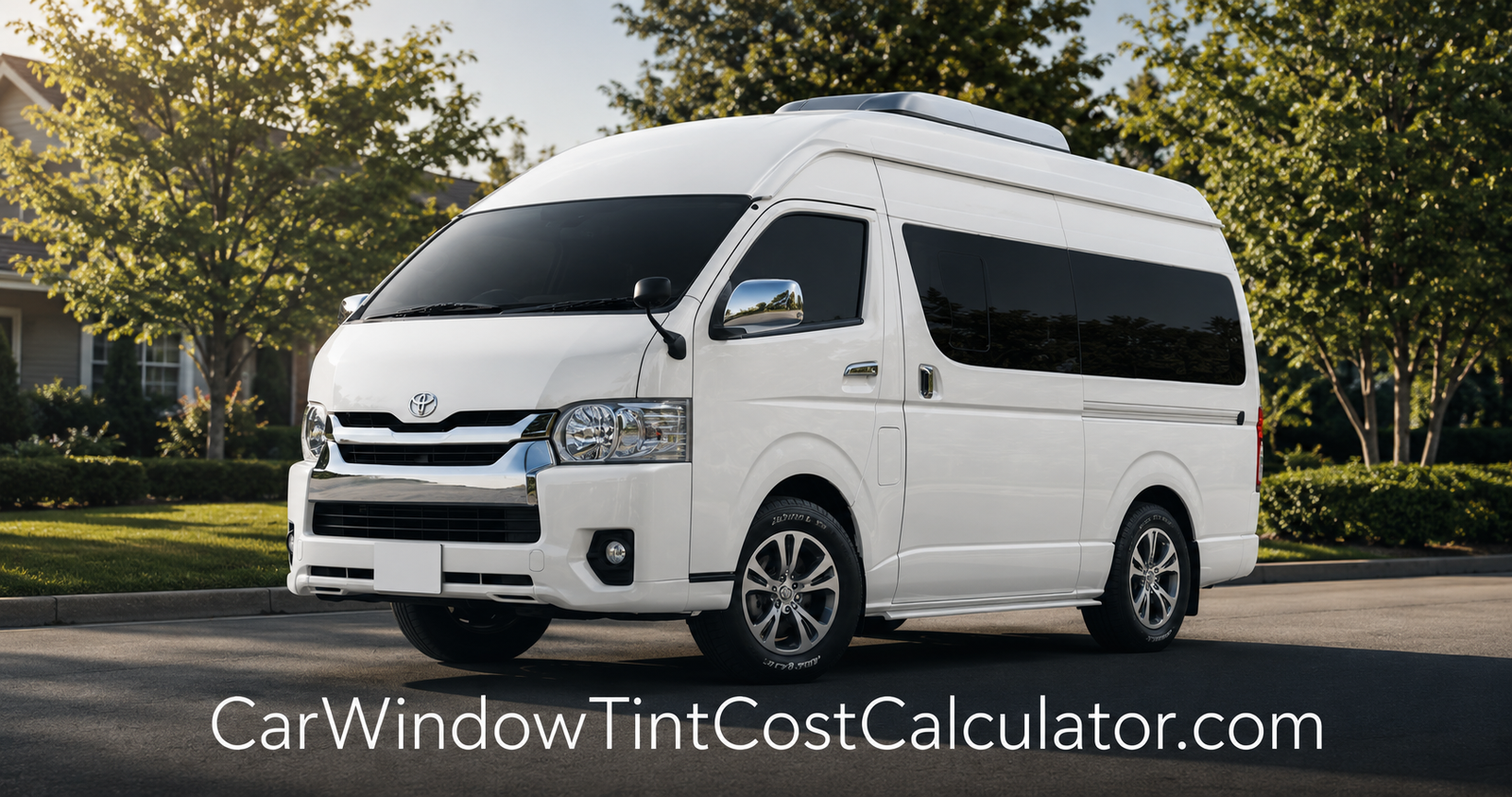
Crystalline Film Cost for Van / Minivan in Suburban (USA)
If you are researching the best window tint cost for a van / minivan, you have likely come across high-performance films that promise superior heat rejection without sacrificing visibility. For a suburban driver looking to upgrade only the front side windows, the crystalline film option stands out as a premium choice. Based on real data from June 27, 2026, the estimated total cost for this specific configuration is $328.29 USD. This figure includes a film cost of $241.88 and a labor cost of $62.10, reflecting the high-end nature of the material and the precision required for installation on a larger vehicle. Understanding exactly what you are paying for and why this price point makes sense for your van is the first step toward a smart investment in comfort and protection.
Why Crystalline Film for a Van / Minivan?
Choosing the right tint film for a van or minivan is different from selecting film for a compact car. The larger glass surface area in a van means more solar energy enters the cabin, which directly impacts interior temperature, upholstery longevity, and driver comfort. Crystalline film is engineered to block up to 99% of UV rays and reject a significant percentage of infrared heat while maintaining a nearly clear appearance. This is especially valuable for vans used for family transport, road trips, or commercial purposes where passengers spend extended time inside.
Unlike dyed or carbon films that rely on darkness to block heat, crystalline technology uses multiple nano-layers to selectively filter light. This means you achieve high heat rejection even at a lighter 35% VLT (Visible Light Transmission). For suburban drivers, this provides a balanced solution: you get the privacy and glare reduction of a tinted window without making the cabin too dark for night driving or parking in dimly lit areas. The van / minivan tint cost for crystalline film reflects this advanced engineering, but the payoff is a consistently cooler interior and reduced strain on your air conditioning system.
Real Cost Breakdown — What Goes Into $328.29
Breaking down the window tint cost for your van helps you see exactly where your money goes. The total of $328.29 USD is split into two primary components: film cost and labor cost. The film cost of $241.88 represents the premium material itself. Crystalline film is one of the most expensive options on the market because of its multi-layer construction and superior performance characteristics. The labor cost of $62.10 covers the professional installation for one front side window on a van, which requires careful trimming, heat shaping, and bubble-free application due to the curved glass and larger panel size.
To give you a clearer picture of where crystalline film sits in the market, here is a comparison of common film types and their estimated costs for a van / minivan front side window in suburban USA:
| Film Type | Est. Cost (Front Side, 1 Window) | Heat Rejection | Lifespan |
|---|---|---|---|
| Dyed Film | $104 USD | Low | 3-5 years |
| Carbon Film | $170 USD | Medium | 5-8 years |
| Ceramic Film | $260 USD | High | 8-10 years |
| Crystalline Film | $328.29 USD | Very High | 10+ years |
As the table shows, crystalline film is the most expensive upfront, but it also offers the highest heat rejection and the longest lifespan. For a van owner who plans to keep their vehicle for several years, the long-term value often outweighs the initial van / minivan tint cost premium. The reduced interior heat also means less fuel consumption from air conditioning, which can offset the price difference over time.
USA Tint Laws You Must Know
Before you schedule your installation, it is critical to understand the legal landscape for window tinting in the United States. Most US states require a minimum of 70% VLT on front side windows. Since you are considering 35% VLT, this is significantly darker than the standard legal limit for the front of the vehicle. It is essential to check your specific state's regulations because laws vary widely. Some states allow darker tints on rear windows and rear windshields, but front side windows are almost always subject to stricter rules.
For authoritative and up-to-date information, always consult tint regulations from the International Window Film Association. They maintain a comprehensive database of state-by-state laws. Violating tint laws can result in fines, failed vehicle inspections, and even requirements to remove the film. If your state does not permit 35% VLT on the front side windows, you may need to choose a lighter film or limit the tint to rear windows only. Always verify compliance before proceeding with your purchase.
What Front Side Tinting Gets You
Tinting only the front side windows of your van might seem like a partial job, but it delivers specific benefits that many suburban drivers find valuable. The front windows are the primary source of direct sunlight hitting the driver and front passenger. By applying crystalline film at 35% VLT, you significantly reduce glare from oncoming headlights and bright sunlight, which improves driving safety. The UV protection also shields your dashboard and steering wheel from fading and cracking, preserving the interior appearance of your van.
Additionally, front side tinting creates a more uniform look when paired with factory-tinted rear windows. Many vans come with privacy glass on rear passenger windows, and matching the front side windows to a consistent darkness enhances the vehicle's aesthetic. The window tint cost for this single-window application is relatively low compared to tinting the entire vehicle, making it an affordable entry point into the benefits of high-performance film. You will notice a cooler cabin temperature on sunny days, even without tinting the rear, because the front windows are the main entry point for solar heat.
Pro Tips Before You Book
To get the most out of your crystalline film investment, keep these professional tips in mind. First, always choose a certified installer who has experience with van windows. The larger, curved glass on a van requires precise heat shrinking and trimming to avoid gaps or bubbles. A poor installation can ruin the performance and appearance of the film. Ask for before-and-after photos of similar van installations before committing.
Second, confirm that the installer offers a warranty on both the film and the labor. Crystalline film typically comes with a manufacturer warranty that covers peeling, bubbling, and discoloration for the lifespan of the film. A separate labor warranty ensures that if the installation fails, you are not charged again for removal and reapplication. Finally, consider the climate in your suburban area. If you experience hot summers, the heat rejection properties of crystalline film will be especially noticeable. If you live in a region with mild weather, you may not need the highest-tier film, and a carbon or ceramic option could provide sufficient performance at a lower van / minivan tint cost.
Frequently Asked Questions
Is $328.29 a fair price for crystalline film on a van front side window?
Yes, this price is consistent with premium film pricing for a van. The film cost of $241.88 reflects the advanced technology of crystalline film, and the labor cost of $62.10 is reasonable for professional installation on a larger window. You are paying for long-term durability and superior heat rejection.
Can I install crystalline film myself to save money?
It is not recommended. Crystalline film is delicate and requires precise heat shaping to fit curved van windows. DIY installation often results in bubbles, creases, and premature failure. The labor cost of $62.10 is a small price for a flawless, long-lasting result.
Will 35% VLT crystalline film make my van illegal?
It depends on your state. Most states require at least 70% VLT on front side windows, and 35% is darker than that. Check your state's specific laws using resources like the IWFA. If 35% is not legal, you may need to choose a lighter film for the front windows.
How long does crystalline film last on a van?
Crystalline film typically lasts over 10 years when professionally installed and properly maintained. It resists fading, peeling, and bubbling better than dyed or carbon films. The long lifespan justifies the higher upfront window tint cost.
Does crystalline film affect radio or GPS signal in a van?
No. Unlike some metallic films, crystalline film is non-metallic and does not interfere with radio, GPS, or cellular signals. This is a key advantage for vans that rely on navigation and communication devices during travel.
Related Tint Cost Guides
- Ceramic Film Tint Cost for Electric Vehicle in Suburban — $397 USD
- Carbon Film Tint Cost for Van / Minivan in Suburban — $170 USD
- Dyed Film Tint Cost for Van / Minivan in Suburban — $104 USD
Calculate Your Exact Tint Cost
Get a personalized estimate for your vehicle, film type, and location — free, instant, no signup.
→ Use Free Calculator ✈️ Telegram Guide